Combed vs Carded Cotton: Differences, Quality & Best Uses
Two T-shirts can both say 100% cotton and feel different after one wash. The reason often sits in the yarn. Combed vs carded cotton is one of the most important fabric decisions for brands and importers in the UK, Netherlands and Europe, because it shapes softness, strength, print quality and price. This guide explains how each yarn is made, compares quality side by side, and shows which suits your T-shirt range, so you can specify fabric with confidence before sampling.
Types of Cotton for T-Shirts: Carded, Combed, Ring-Spun and Open-End
These terms describe two different things. Carded and combed describe how the cotton fibre is prepared. Ring-spun and open-end describe how the yarn is spun. So a T-shirt fabric can be combed ring-spun, carded ring-spun or carded open-end. Cotton fibre type, such as long-staple varieties, is a separate factor again.
How Cotton Yarn Manufacturing Works
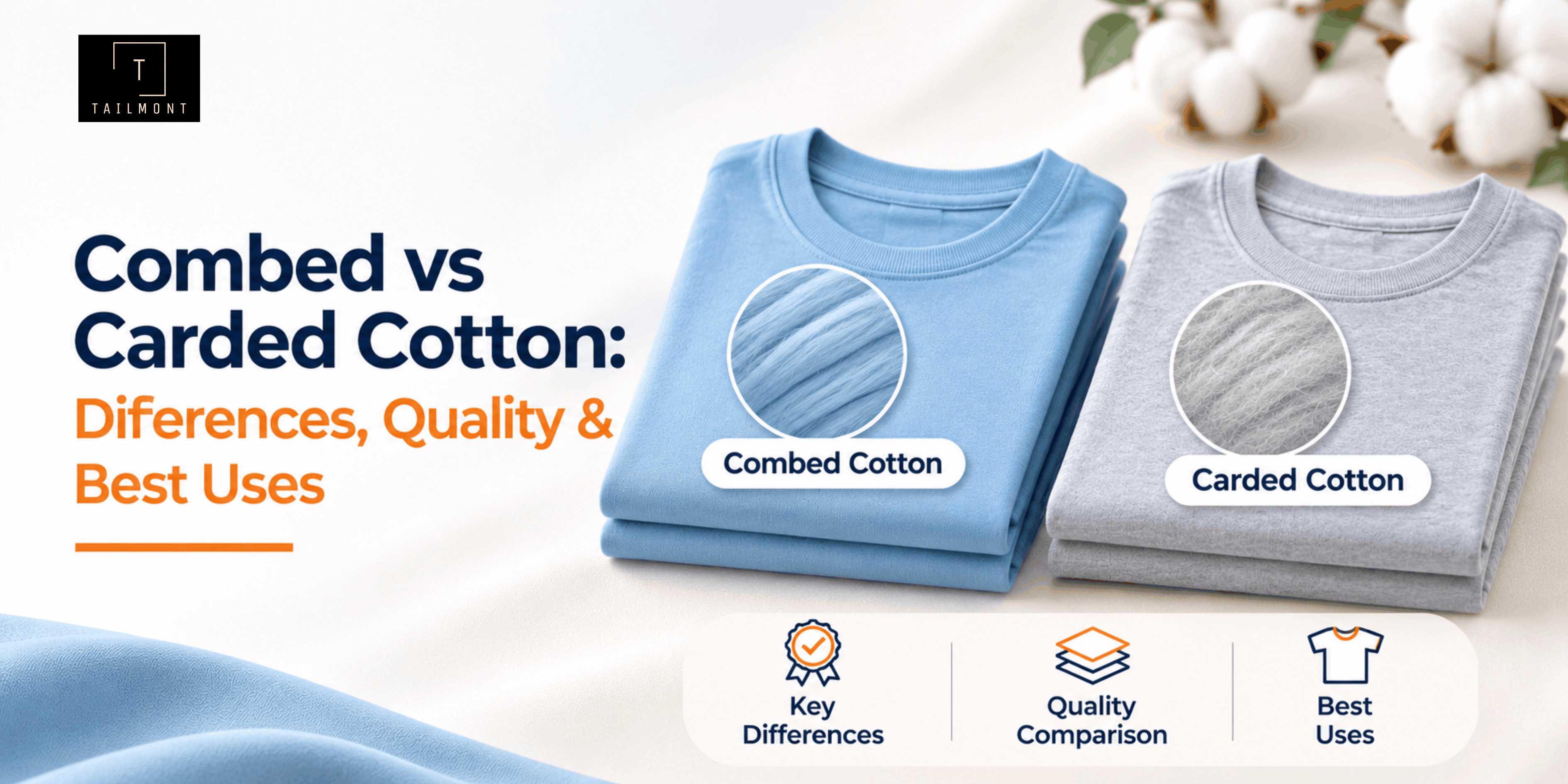
After ginning and cleaning, cotton goes through carding, which aligns the fibres into a loose rope called sliver and removes some impurities. Combed yarn then goes through an extra combing step that removes shorter fibres and remaining impurities. Carded yarn skips this step. The sliver is then drawn, twisted and spun into yarn.
Carded Cotton
Carded cotton keeps a mix of long and short fibres. The yarn is slightly hairier and more textured, and it costs less. It is durable for everyday use.
Combed Cotton
Combing removes short fibres, so the yarn is smoother, stronger and more uniform. It allows finer yarns, but the extra process and fibre loss raise the cost.
Ring-Spun Cotton
Ring spinning twists and thins the fibre into a fine, soft and strong yarn. Combed ring-spun cotton is a popular choice for premium T-shirts. Open-end yarns are bulkier, are usually carded and are common in value basics.
Combed vs Carded Cotton: Quality Comparison
Combed vs carded cotton comes down to how much extra processing the fibre receives. Results also depend on yarn count, GSM, knit and finishing.
|
Factor |
Combed cotton |
Carded cotton |
|
Fibre processing |
Carded, then combed |
Carded only |
|
Feel |
Smoother and softer |
Slightly rougher and more textured |
|
Strength |
Higher |
Good for everyday use |
|
Surface |
More even, less hairiness |
More short fibres and hairiness |
|
Pilling |
Lower tendency |
Higher tendency |
|
Print surface |
Smoother, supports sharper detail |
Slightly more textured |
|
Cost |
Higher |
Lower |
|
Suits |
Premium T-shirts, polos, fashion basics |
Promotional tees, workwear, budget basics |
Combed vs Carded Cotton for Different T-Shirt Uses
- Premium fashion tees and polos: combed, often ring-spun.
- Prints with fine detail: combed, for a smoother surface.
- Promotional, event and uniform T-shirts: carded, for value.
- High-volume budget basics: carded.
- Heavier knits such as fleece: carded yarns are often used.
How to Choose the Right Cotton for Your Range
When choosing between combed vs carded cotton, match the yarn to your price point, brand position and end use. Ask your supplier for:
- Yarn type (carded or combed) and spinning method.
- Yarn count, GSM and composition.
- Shrinkage and pilling test results.
- A fabric swatch or sample to feel and wash-test.
Common Mistakes When Choosing Combed vs Carded Cotton
- Judging fabric by “100% cotton” alone.
- Confusing combed with ring-spun.
- Choosing by GSM only.
- Skipping the swatch and wash test.
- Paying for a premium yarn where it is not needed.
- Changing fabric after sample approval.
Why Choose TailMont
- Premium quality you can trust: carefully selected fabrics chosen for comfort, durability and colour retention.
- Customisation that fits your brand: fabrics, colours, fits, labels, trims, printing and embroidery.
- A clear process: fabric sourcing, stitching standards, quality control and secure packaging.
- Flexible order quantities for brands, importers and private-label buyers.
- Samples in 7-14 days.
- Built for global markets: developed for UK, US and European buyer expectations.
- Customer-first approach: responsive support and transparent communication at every stage.
FAQs
Which is better: combed vs carded cotton?
Combed is smoother, stronger and better for premium tees and fine prints. Carded is more economical and suits promotional or everyday items. The right choice depends on your brand, price point and use.
Is ring-spun the same as combed?
No. Combed describes fibre preparation, and ring-spun describes the spinning method. A fabric can be both.
Does combed cotton shrink less?
Shrinkage depends mainly on knit, finishing and pre-shrinking, not only on the yarn. Ask for shrinkage test results for your fabric.
Specify the Right Fabric for Your Range
Share your styles, fabric preferences and quantities, and our team will guide you through the next steps.
Tailmont supports B2B apparel manufacturing, customisation, and export-related business enquiries for the UK, Netherlands, and Europe.
Website: https://tailmont.com/
Phone: 89715 29797
Email: info@tailmont.com
Follow TailMont:
- LinkedIn: https://www.linkedin.com/company/tailmont
- Instagram: https://www.instagram.com/tailmont.official/