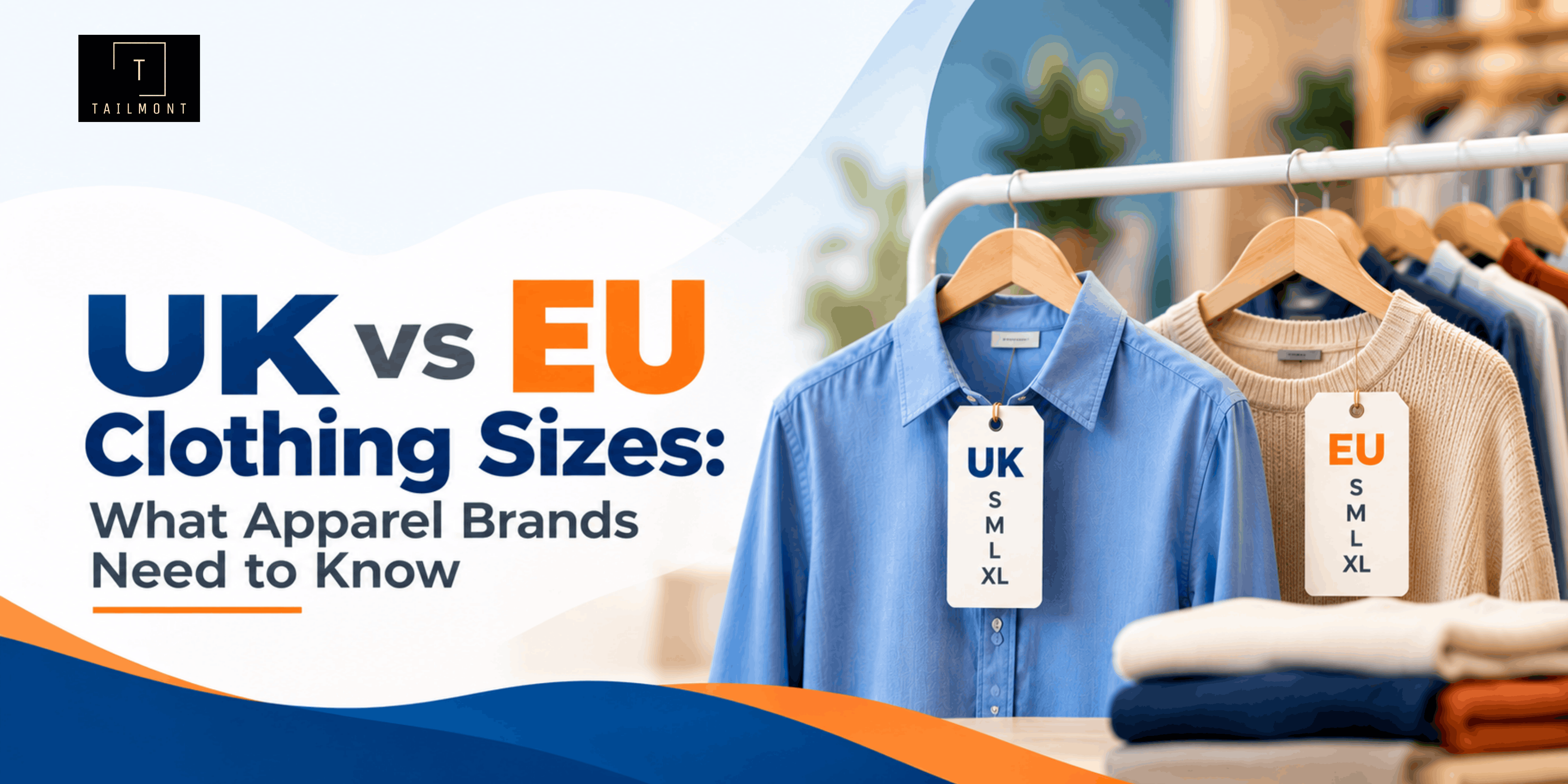
UK vs EU Clothing Sizes: What Apparel Brands Need to Know
If your brand sells menswear in both the UK and Europe, you have probably seen the problem: a customer orders a size 40 jacket and the fit isn’t what they expected. Often the garment isn’t faulty. The customer and the brand are simply reading two different sizing systems.
Understanding UK vs EU clothing sizes is a business issue as much as a technical one. Wrong sizing leads to returns, negative reviews and lost repeat customers. This guide explains how the two systems work, where they differ, and what brands can do to size products properly for both markets.
Why UK vs EU Clothing Sizes Don’t Match
The main reason is that the two regions measure in different units and label sizes differently.
- The UK uses a mix of inches and letter sizes (S, M, L). Tops and jackets are usually labelled by chest size in inches, and trousers by waist and leg length in inches.
- The EU uses a numeric system based on centimetres, usually shown as even numbers such as 46, 48, 50 and 52. Letter sizes are also common on casual wear.
Where the Confusion Starts
- The same number means different things. A UK 40 is a chest measurement in inches, while an EU 40 usually refers to a shirt collar in centimetres.
- Letter sizes are not standardized. A medium from one brand can be a small from another.
- EU countries don’t always agree. Germany, France and Italy each have their own habits, especially in tailoring and fit.
UK vs EU Size Differences at a Glance
Here are the key UK vs EU size differences brands should keep in mind:
- Unit of measurement: inches in the UK, centimetres in the EU.
- Labelling style: UK tops often carry the chest number directly (e.g. 40), while EU tops use a converted garment number (e.g. 50).
- Fit preference: continental European menswear often runs slimmer and more tailored, while UK casualwear can feel roomier.
- Letter sizing: both use XS to XXL, but the underlying measurements often differ between brands.
UK vs EU Size Chart for Men’s Polo Shirts and T-Shirts
Polos and tees are usually sold in letter sizes (S, M, L) in both regions. The UK size is based on body chest in inches, while the EU number is a converted metric size. Use the chart below as a starting point and check it against your own specifications.
Regular Fit T-Shirts and Polo Shirts
|
Letter Size |
UK Body Chest (inches) |
Body Chest (cm) |
EU Size |
|
XS |
34–36 |
86–91 |
44 |
|
S |
36–38 |
91–97 |
46 |
|
M |
38–40 |
97–102 |
48–50 |
|
L |
40–42 |
102–107 |
50–52 |
|
XL |
42–44 |
107–112 |
52–54 |
|
XXL |
44–46 |
112–117 |
54–56 |
|
3XL |
46–48 |
117–122 |
56–58 |
Oversized T-Shirts
Oversized tees are cut much wider than the body, so the body chest chart alone isn’t enough. Garment measurements matter more here, and many brands also sell them in “one size up” or “one size down” styling.
|
Letter Size |
Garment Chest (inches) |
Garment Chest (cm) |
Garment Length (inches) |
Garment Length (cm) |
|
S |
44 |
112 |
28 |
71 |
|
M |
46 |
117 |
29 |
74 |
|
L |
48 |
122 |
30 |
76 |
|
XL |
50 |
127 |
31 |
79 |
|
XXL |
52 |
132 |
32 |
81 |
These figures are approximate. Check them against your own garment specs before publishing.
How Fit Changes the Measurements
- Regular fit t-shirt: garment chest is usually 4–6 inches (10–15 cm) larger than the body chest.
- Polo shirt: typically a little closer to the body, with about 3–5 inches (8–13 cm) of extra room. The collar and placket add structure, so sizing runs slightly less forgiving than a tee.
- Oversized t-shirt: garment chest is usually 8–12 inches (20–30 cm) larger than the body chest, often with a dropped shoulder and a longer body.
Tips for Listing Polos and Tees in UK and EU Markets
- Show UK letter size, UK chest in inches and EU size side by side in your size selector.
- For oversized styles, list garment chest, length and shoulder width so customers can compare against a tee they already own.
- Add a clear fit label such as “Regular”, “Relaxed” or “Oversized” on every product page.
- Note when a style is intended to be worn true to size or sized down for a less baggy look.
- Remember that European customers often expect a slimmer cut, so a clear fit note helps avoid returns on oversized and relaxed styles.
Private Label Clothing Sizing for UK and EU Brands
With private label clothing sizing, the fit your customer receives is your responsibility, even when someone else makes the garment. A factory will build to the specification you approve, so your brand has to decide what each size actually means before production starts.
Take a UK brand launching a men’s polo shirt range for both Britain and Europe. It needs to settle the fit, grading rules and measurements up front, because fixing them after bulk production is slow and expensive.
What to Define Before Production
- Target customer: Decide who you are designing for and what fit they expect. A UK shopper may prefer a relaxed cut, while many European customers lean towards a slimmer one.
- Base size: Choose the size your pattern is built on, usually a medium, and confirm its exact measurements.
- Size grading: Set how much each measurement (chest, length, shoulder, sleeve) grows or shrinks from one size to the next.
- Fit approval: Review samples in more than one size where possible, not just the base size, and try them on real people.
- Production consistency: Check finished garments against the approved specification, including agreed tolerances.
- Labels and product information: Make sure size labels, UK and EU size charts and product page details all describe the garment accurately.
Why Choose Tailmont?
Tailmont helps apparel brands get sizing, fit and production right for both UK and EU markets. Our team works with you from specification to finished garment, so every size matches what your customers expect.
- Market-ready sizing: Size specs built for UK and European customers.
- Consistent quality: Fit approved before bulk production, and checked on every order.
- Private label support: Polos, t-shirts and oversized tees made to your brand’s requirements.
Ready to Build Your Next Range?
Get in touch with our team today to discuss B2B apparel manufacturing, customization, and export opportunities.
📧 Email: info@tailmont.com
📞 Phone: +91 89715 29797
🌐 Website: https://tailmont.com/
🔗 LinkedIn: https://www.linkedin.com/company/tailmont
Frequently Asked Questions
1. Are UK and EU men’s t-shirt sizes the same?
Not exactly. UK sizes are based on body chest in inches, while EU sizes use a metric number such as 48 or 50. A UK medium (38-40 inch chest) is roughly an EU 48-50.
2. How do I convert UK to EU sizes for men’s polo shirts?
Add about 10 to the UK chest size. For example, a UK 38 is roughly an EU 48. Always check the brand’s own size chart, as fit varies.
3. How should an oversized t-shirt fit compared with a regular one?
An oversized tee is usually cut 8-12 inches (20-30 cm) wider than the body chest, often with dropped shoulders. Many customers pick their usual size for the intended look or size down for less volume.
4. Do European brands run smaller than UK brands?
Often they are cut slimmer, so some men go one size up. This depends on the brand, so garment measurements are more reliable than letter sizes.
5. What should brands show on product pages for UK and EU customers?
Show UK size, EU size and garment measurements together. Add a clear fit label (regular, relaxed or oversized) to reduce returns.