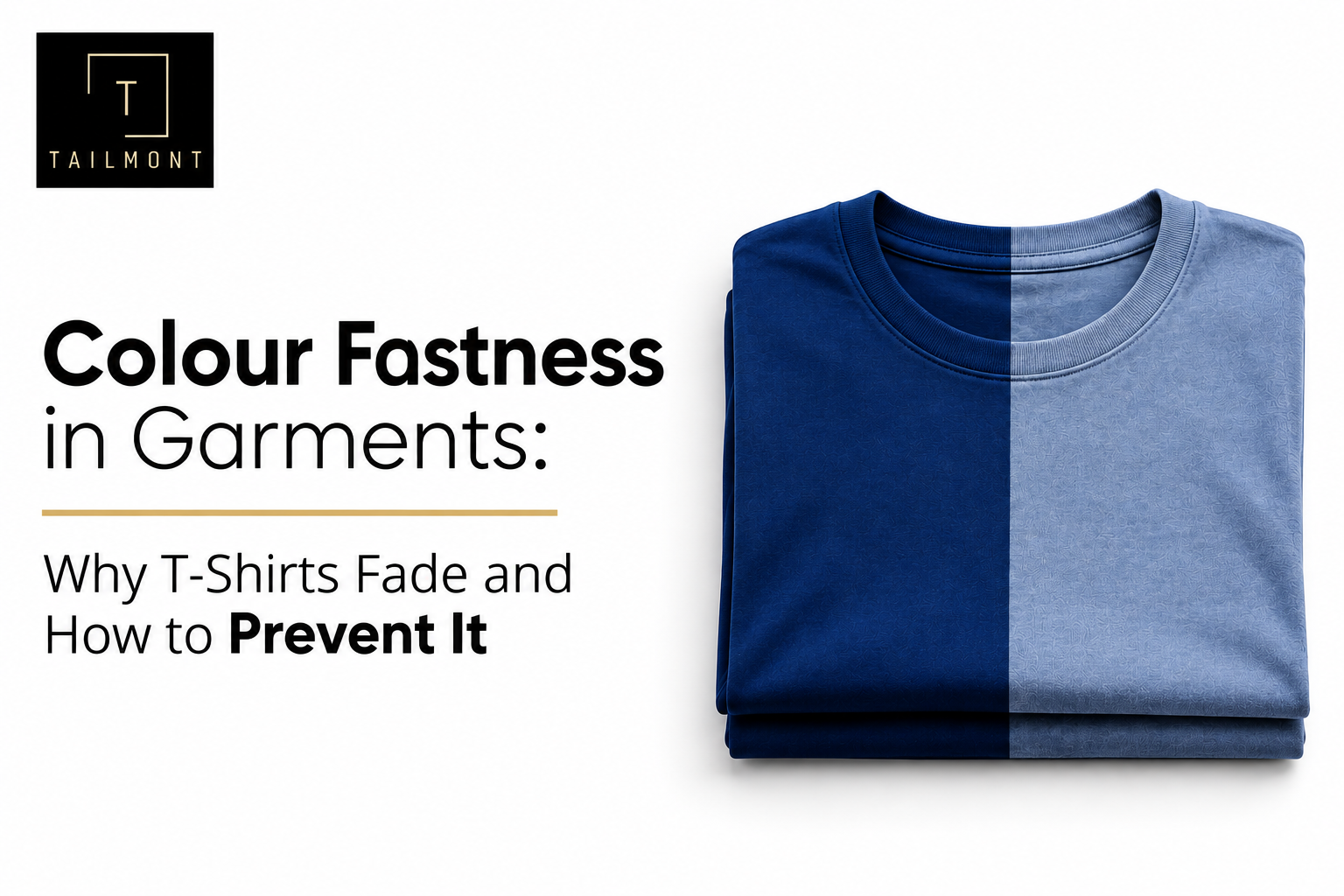
You wash a new T-shirt once and the deep navy turns dull grey. For brands, that single wash can trigger returns, bad reviews and lost reorders. The root cause is almost always poor colour fastness in garments, and it is easier to prevent than most buyers realise. This complete guide explains why T-shirts really fade, how colour is properly tested, and what importers across the Netherlands and wider Europe should check with suppliers before approving any large bulk production order.
What Is Colour Fastness in Garments?
Colour fastness in garments is a fabric’s ability to keep its colour when exposed to washing, rubbing, sunlight, sweat and water. Fabrics with high fastness hold their shade through repeated use. Fabrics with low fastness fade, bleed onto other items or stain skin and other clothes.
For a T-shirt brand, fastness is a quality signal. Customers rarely check a test report, but they notice fading after a few washes.
Why T-Shirts Fade: Causes of Poor Dye Quality
Fading usually starts in production, not in the customer’s washing machine. The most common causes are:
- Poor dye selection: the dye type does not suit the fibre. Cotton, for example, is commonly dyed with reactive dyes that bond with the fibre.
- Unfixed dye left in the fabric: if loose dye is not washed off after dyeing, it releases in the first wash.
- Dark and saturated shades: black, navy and deep red need more dye and more careful processing.
- Low-quality yarn or fabric: uneven fibres take dye unevenly and fade faster.
- Harsh finishing or washing: aggressive treatments can weaken colour.
Care also plays a part. Hot water, bleach, harsh detergent and long direct sunlight all speed up fading, even on good fabric.
How Colour Fastness in Garments Is Tested
Labs rate each test on a grey scale from 1 (poor) to 5 (excellent). Many suppliers follow ISO or AATCC test methods.
|
Test |
What it checks |
Why it matters |
|
Wash fastness |
Colour loss and bleeding in washing |
Prevents faded T-shirts and stained laundry |
|
Rubbing fastness (dry and wet) |
Colour transfer when rubbed |
Prevents marks on skin and other clothes |
|
Light fastness |
Fading under sunlight |
Protects outdoor and summer wear |
|
Perspiration fastness |
Reaction to sweat |
Important for activewear and polos |
|
Water fastness |
Colour bleed in water |
Avoids staining during care |
Ask which standard the supplier used and whether the report covers your actual fabric and colour, not just a similar sample.
Wash Fastness and Rubbing Fastness: What Buyers Should Know
Wash Fastness
Wash fastness tells you whether a T-shirt keeps its shade through home laundering. Bright and dark colours deserve extra attention because they show fading and bleeding fastest.
Rubbing Fastness
Wet rubbing is usually the tougher test, since colour transfers more easily when damp. Poor results here often lead to marks on skin or on light-coloured items.
What Importers Should Ask Before Bulk Approval
Treat fastness as a purchase requirement, not an afterthought. Before approving bulk, ask your T-shirt manufacturer for:
- Test reports for each key colour, not just one shade
- The grey scale ratings for wash, rubbing and light fastness
- A pre-production sample washed and checked against the approved colour
- Clarity on dye type and finishing used
- Confirmation of the quality checks done during production
Ask for colour fastness in garments test reports for dark and bright shades first, because these carry the highest risk. Cheaper fabric or a rushed dye lot often shows up here.
How to Prevent T-Shirt Fading
Good production comes first, but care guidance helps too. Share these tips on your labels or product pages:
- Wash inside out in cool or cold water.
- Use mild detergent and avoid bleach.
- Dry in shade or low heat instead of direct sun.
- Wash dark colours separately in the first few washes.
Care advice cannot fix weak colour fastness in garments. It only protects products that were dyed and finished properly in the first place.
Why Choose TailMont
- Premium quality you can trust: carefully selected fabrics chosen for comfort, durability and colour retention, backed by rigorous quality checks.
- Customisation that fits your brand: fabrics, colours, fits, labels, trims, printing and embroidery.
- Consistent, reliable supply: dependable production and timely deliveries that help you plan inventory.
- Clear process: fabric sourcing, stitching standards, quality control and secure packaging at every stage.
- Built for global markets: developed for UK, US and European buyer expectations.
- Customer-first approach: responsive support and transparent communication at every stage.
FAQs
How can I check colour fastness in garments at sample stage?
Wash the sample as your customers would, then compare it with the approved colour. Rub it dry and wet on a white cloth, and ask the supplier for lab test reports for the same colour and fabric.
Which T-shirt colours fade the fastest?
Dark, saturated shades such as black, navy and deep red usually need the most careful dyeing, so they show weaknesses first. Always test these colours thoroughly.
What grey scale rating is acceptable?
Many buyers look for ratings of about 4 or higher on the grey scale for wash and rubbing, but requirements vary by market and product. Confirm your target with the supplier before production.
Does TailMont offer private label T-shirts?
Yes. TailMont offers private label and custom apparel for selected B2B partners, including labels, packaging and finishing.
Ready to Source T-Shirts That Keep Their Colour?
Share your styles, colours and target market, and our team will guide you through the next steps.
Request a Quote | Polo T-Shirts | Casual Shirts
Email: info@tailmont.com | Phone: +91 8971529797
Follow TailMont:
- LinkedIn: https://www.linkedin.com/company/tailmont
- Instagram: https://www.instagram.com/tailmont.official/